Home / Blog / What is Coronary Artery Disease? Its Causes, Symptoms, Diagnosis & Treatment
Coronary artery disease (CAD) is a prevalent and serious heart condition that blocks the flow of blood to the cardiac muscle, thus resulting in increased cases of heart attacks as well as cardiovascular complications worldwide.
In patients with CAD, the oxygen-carrying blood is blocked from reaching the heart, leading to signs such as chest angina and dyspnea that may progress into congestive cardiac failure.
Knowing how to prevent, detect, and cure this illness will help control it and increase people’s well-being. In this article, we discuss the leading causes of coronary heart problems, symptoms, best treatment options, and more.
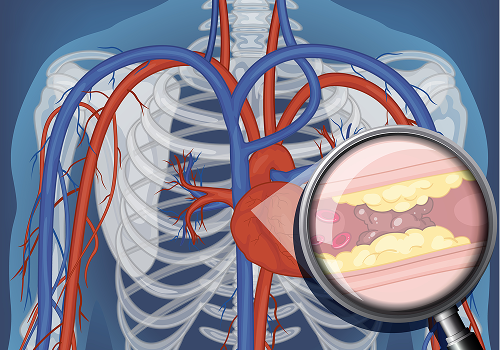
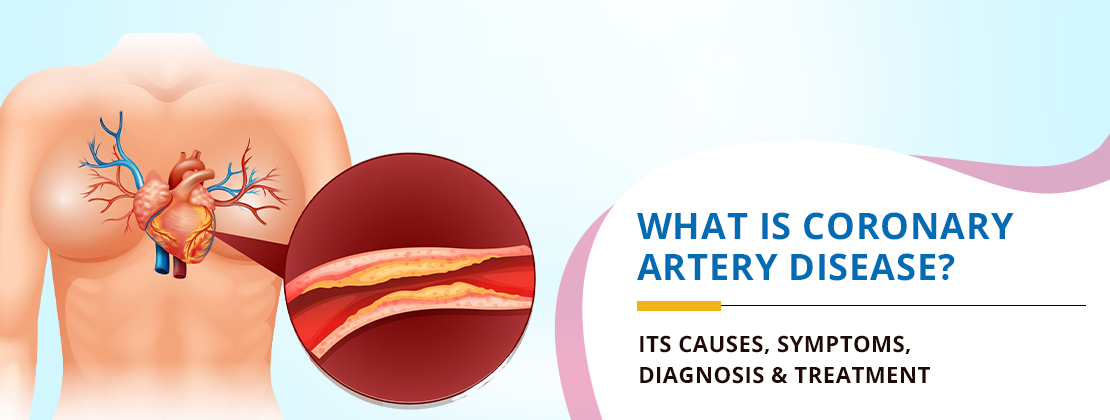
Coronary artery disease is a condition in which the coronary arteries become narrow or blocked. The coronary arteries are the main vessels that supply the heart muscle with oxygenated blood, making them essential for the normal functioning of the heart.
Plaque is formed when cholesterol, fats, and other components accumulate in the blood vessels; if this happens in the arteries, it is referred to as coronary artery disease.
Angina (chest pain) or heart attacks may arise when atherosclerosis progressively narrows down or completely obstructs the passage of blood in the arteries.
Often, the terms CAD and heart disease are used synonymously. However, CAD is a term used to describe illnesses occurring in coronary arteries, whereas heart diseases refer to conditions affecting the heart’s muscles, valves, or electrical conduction system or disturbing electrical functions in the human heart.
In most cases, CAD goes hand-in-hand with other cardiovascular issues, complicating diagnosis and treatment.
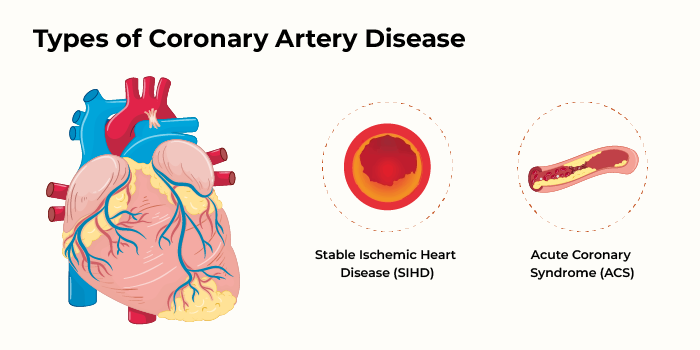
There are different types of coronary artery disease. The treatment for these types varies depending on individual case parameters.
1. Stable Ischemic Heart Disease (SIHD): Stable ischemic heart disease is a milder type of CAD, where blood flow to the heart is consistently reduced but usually stable.
People may get chest pain if they make any physical effort or experience emotional pressure. However, such patients usually feel better after a short rest or having taken drugs.
Although SIHD can be controlled most of the time, there is a need for continuous prevention and risk minimisation efforts.
2. Acute Coronary Syndrome (ACS): ACS is a condition that causes a sudden decrease in blood supply to the heart, which usually results in heart attacks or very serious angina.
Unstable angina and myocardial infarction are part of this condition, the former being characterised by unpredictable pain in the chest even when one is resting, while the latter is described as a form of heart attack that requires immediate medical attention.
Immediate medical attention is critical in cases of ACS to restore blood flow and minimise heart muscle damage.
Coronary artery disease is caused by a mixture of lifestyle, genetic, and health factors. Here are some of the main causes and risk factors:
Atherosclerosis: CAD and atherosclerosis are mainly caused by the deposition of cholesterol and related substances within the arterial tunica intima, leading to plaque formation. This buildup restricts blood flow, hardens arteries, and makes them prone to rupture, which can lead to blood clots and heart attacks
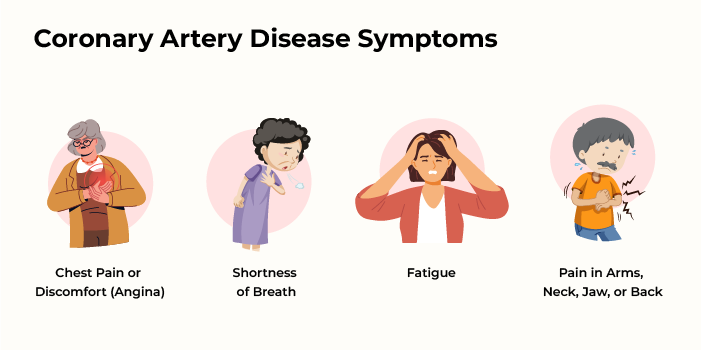
Coronary artery disease symptoms can vary in severity and frequency depending on the level of arterial blockage. It is important to identify these signs of illness on time so that medical help can be sought without delay. Some of the usual coronary artery disease symptoms are:
Here is a video where one of our specialists discusses the warning signs of heart disease:
Coronary artery disease symptoms should be monitored, and medical help should be sought if they occur often or get worse because this could mean that acute coronary syndrome is developing.
To know how much the arteries are blocked, it is important to carry out a series of examinations and assessments for patients with coronary artery disease. Some of the common tests carried out for this purpose are:
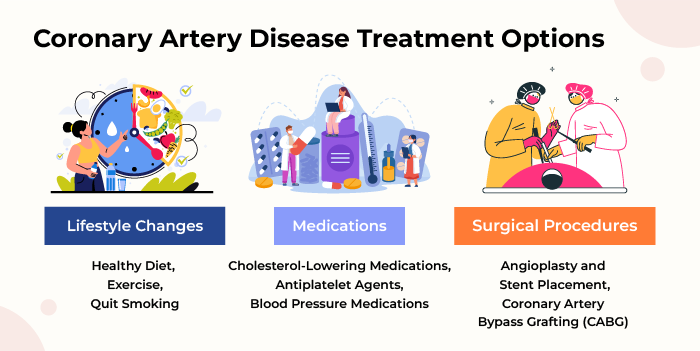
Coronary artery disease treatment is personalised to cater to the individual care needs of each patient. Normally, treatment involves changing one’s lifestyle, medications, and surgical procedures.
Watch this video where one of our specialists discusses how angioplasty helps in managing heart diseases:
Here is a video where one of our heart specialists dispels various misconceptions about heart surgery:
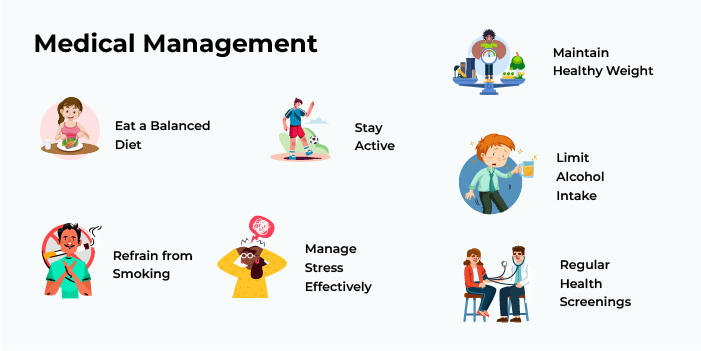
Although CAD is controllable, prevention is better. Here are some effective strategies:
At HCG Hospitals, we have customised heart health screening packages that comprise various tests that examine the heart’s functioning. Based on the observations from these tests, individuals can consult a heart specialist for further evaluation.
Explore Heart Health Packages at HCG Here: Preventive Heart Checkup – HCG Hospitals
Regular monitoring of blood pressure, cholesterol, and blood sugar may identify potential risk factors early, allowing for the adoption of appropriate preventive measures or seeking necessary treatment interventions.
Coronary artery disease is a common yet preventable heart condition. With early recognition of coronary artery disease symptoms and timely treatment, the impact of CAD can be managed effectively. People suffering from CAD can improve their health by adopting a healthier lifestyle, going for regular medical check-ups, and seeking medical help whenever necessary. This is one of the most common illnesses today, but it can easily be prevented by knowing about it and taking precautions. When you notice signs of coronary heart disease, remember to seek medical advice to safeguard your health.
HCG Hospitals is one of the best multispeciality hospitals in India, offering advanced cardiac care facilities and expertise. With a dedicated cardiac care department led by some of the best cardiologists in India, we provide comprehensive diagnostic and treatment services to help patients achieve optimal heart health. Our hospitals in Ahmedabad, Bhavnagar, Rajkot, and Hubli serve as centres of excellence for 360-degree cardiac care.

This article is medically reviewed by Dr. Brajmohan Singh, Senior Consultant - CVTS, HCG Hospitals, Ahmedabad.
Different tests are recommended for coronary artery disease (CAD) diagnosis. Initially, the doctor will recommend a physical examination and medical history assessment. Based on the observations, additional tests will be recommended.
Different tests recommended for CAD diagnosis include blood tests, electrocardiography (ECG), echocardiography (echo), stress test, cardiac CT scan, cardiac MRI, and coronary angiography.
A particular type of cholesterol, LDL cholesterol, or bad cholesterol, can stick to the walls of the arteries when present in more than normal levels. This buildup eventually combines with fat, calcium, and other substances to form plaque.
Angina, heart attacks, and chest pain are more likely to be caused by plaque because it narrows the arteries, reducing the amount of blood that reaches the heart tissue.
A heart-healthy diet comprises balanced portions of macronutrients and micronutrients. It is important to identify foods that are not healthy for the heart and reduce or avoid their intake. The eating habits listed below can help your heart remain hale and healthy.
See a doctor as soon as possible if:
Avoid trying to drive yourself during a heart attack. Instead, call for emergency help right away.
department for emergency and critical care, where specialists provide necessary medical interventions immediately and support your swift recovery.
We have more sophisticated treatments available for CAD today. At HCG Hospitals, our cardiologists and cardiac surgeons employ personalised treatment approaches that support prompt recovery with fewer complications.
Different modern treatment approaches available for CAD include coronary artery bypass surgery (CABG) for severe blockages, drug-eluting stents to prevent re-narrowing, advanced imaging and AI-based diagnostics for precise evaluation, cardiac rehabilitation, and lifestyle changes to improve long-term heart health. Angioplasty and stenting are also options for widening constricted arteries.
The following are some early symptoms of CAD, even though it often develops silently:
Always pay attention to these symptoms because an early diagnosis can prevent a heart attack or other serious complications.
If your parents or siblings have had or are having heart diseases, you are at a higher risk. This might be due to genetics, similar lifestyle choices, or both.
Knowing your family history helps doctors identify risk early. Regular checkups, cholesterol monitoring, and healthy lifestyle choices can significantly reduce your risk of developing CAD.






 Neurosurgery
  Cardiology
 Neurology
 Orthopaedic And Joint Replacement Surgery
 Spine Surgery
 Urology
  Oncology
 Pulmonology
  Dietician
  psychiatry
 Nephrology
 ENT
ENT Gastroenterology
  Dentistry
  Radiology
 Critical Care