Home / Blog / Types of Angina: Stable, Unstable, and Variant Angina Explained
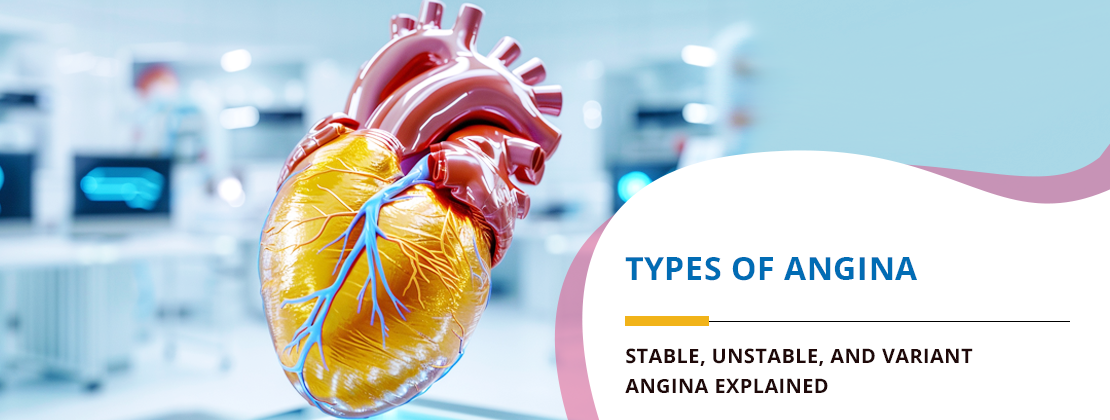
Angina is chest pain or discomfort that happens when the heart muscle doesn’t get enough blood. It’s a common symptom of heart disease. It is important to understand that there are different types of angina, each with distinct causes, symptoms, and management strategies.
In this blog post, you will find information on three main types of angina pectoris: stable angina, unstable angina, and variant angina (Prinzmetal’s angina). By understanding these variations, you can take the necessary steps for effective management and treatment.
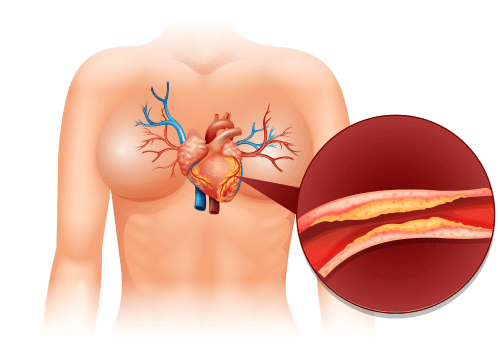
Angina is chest pain or discomfort caused by decreased blood flow to the heart muscle, usually due to blockage or narrowing of the coronary arteries. It often manifests as heaviness, tightness, or pressure across the chest that may radiate into the arms, neck, jaw, or back. There are three main kinds of angina:
These variations differ in their triggers, symptoms, and severity.
Definition: Stable angina is the most common form of angina. It happens when the heart’s oxygen demand increases during physical activity, emotional stress, or after heavy meals, but narrowed arteries can’t supply enough blood.
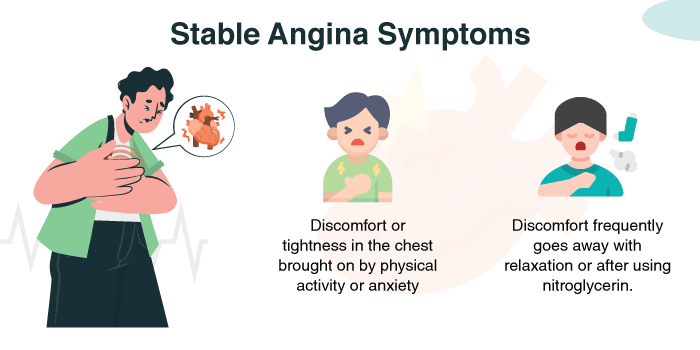
Stable angina can usually be managed with the right treatment and lifestyle changes.
Title tag: Unstable Angina
Alt tag: Unstable Angina
Definition: Unstable angina is a more severe and less predictable type of angina. It can happen unexpectedly, sometimes while you’re at rest, and might last longer than stable angina. Unstable angina is considered a medical emergency.
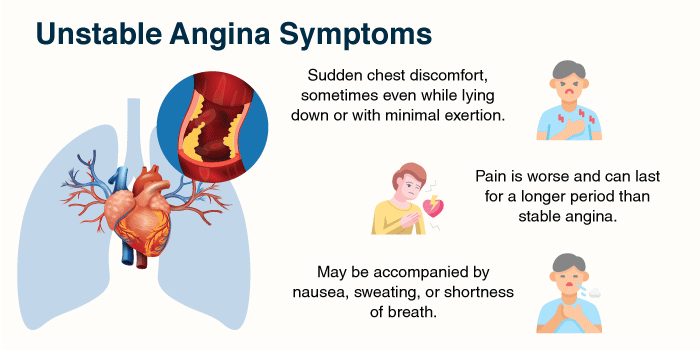
Unstable angina considerably raises the chance of a heart attack and requires quick diagnosis and treatment.
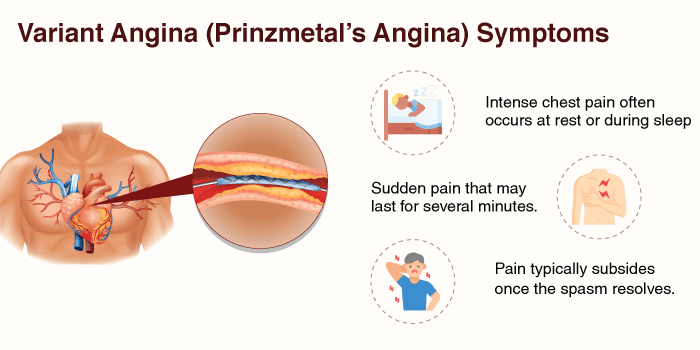
Definition: Variant angina, which is also called Prinzmetal’s angina, is an unusual type of angina pectoris. It occurs when spasms in the coronary arteries temporarily limit blood flow to the heart muscle.
When treated correctly, variant angina can be managed effectively; moreover, the risk of heart attacks is lower than with other forms of angina.
The following are the different management strategies available for angina pain:
Angina pectoris is a severe condition resulting from decreased cardiac blood flow and has three main types: stable angina, unstable angina, and variant angina. It is crucial to recognise the causes and symptoms of these so that they can be managed effectively. If you experience chest pain or suspect you may have angina, talk to the cardiac experts at HCG hospitals. We are one of the best multispeciality hospitals in India, with locations in Ahmedabad, Bhavnagar, Hubli, and Rajkot. Visit our cardiology speciality page to learn more about our comprehensive heart care services: HCG Hospitals: Best Heart Hospital in India.

This article is medically reviewed by Dr. Jay Shah, Sr. Interventional Cardiologist, HCG Hospitals, Ahmedabad.
When plaque ruptures or a tiny clot blocks an artery, blood flow to the heart decreases rapidly, causing unstable angina. It is a medical emergency that can happen even while you are at rest.
Treatment options for unstable angina include medications like statins, nitroglycerin, and antiplatelets, angioplasty, and stenting. Additionally, lifestyle modifications like healthy eating, effective stress management, and smoking cessation are recommended.
Stable angina occurs due to physical exertion, such as exercise or heavy work, or stress. It often goes away with rest or medicine. It is predictable and short.
Unstable angina, on the other hand, can occur suddenly, persist longer, and not entirely go away with rest or conventional medication, even when you’re at rest. It needs immediate medical attention.
Variant angina refers to the type of chest pain that occurs due to inadequate blood flow to the heart muscle, and it often occurs between midnight and morning. Measures to manage variant angina naturally include avoiding or quitting smoking, effective stress management, limited alcohol and caffeine consumption, protecting oneself against extreme cold temperatures, and lastly, adopting a heart-healthy diet.
For detailed guidelines on variant angina management, one must see a specialist at a super-speciality hospital like HCG Hospitals.
Angina at night can be caused by a variety of factors, including changes in blood pressure, artery spasms, stress during dreams, lying flat, and eating large meals just before bed.
If you wake up with chest pain, get medical help right away because it could be unstable angina or a heart attack.
Unstable angina manifests as intermittent chest pain without heart damage.
However, a heart attack causes severe, persistent pain, sweating, dyspnea, and nausea, along with damage to heart tissue.
Because symptoms can overlap, any new or persistent chest pain should be considered an emergency.
Variant angina usually manifests as resting chest pain, often in the morning. The pain, which may radiate to the arms, neck, or jaw, is relieved by nitroglycerin.
Physicians use an ECG or angiography to confirm the diagnosis of artery spasms and rule out other causes.
Women may feel pressure or tightness in their shoulders, back, jaw, neck, or chest instead of sharp pain. They might also feel drained or nauseous or have shortness of breath.
Women must see a doctor in the case of persistent chest pain or uneasiness in the chest region.
Eat a lot of fruits, vegetables, lean meats, and whole grains. Instead of processed or fried foods, choose healthy fats like nuts and olive oil.
Limit sugar, salt, and portion sizes, and steer clear of heavy or late meals.
Angina is a brief chest pain caused by reduced blood flow to the heart tissue. It usually doesn’t cause permanent damage.
A heart attack is caused by a total obstruction of blood flow, which irreversibly damages the heart. If the pain is severe and does not subside with rest, seek emergency help immediately.






 Cardiac Sciences
 Spine Surgery
 Orthopaedic & Joint Replacement Surgery
 Neurosciences
 Critical Care Medicine
 Internal Medicine
 Oncology
 Pulmonology
  Dietician
  psychiatry
 Nephrology
 ENT
ENT Gastroenterology
  Dentistry
  Radiology