Home / Blog / World Alzheimer’s Day 2025: Early Symptoms, Awareness, & Prevention
September 8, 2025
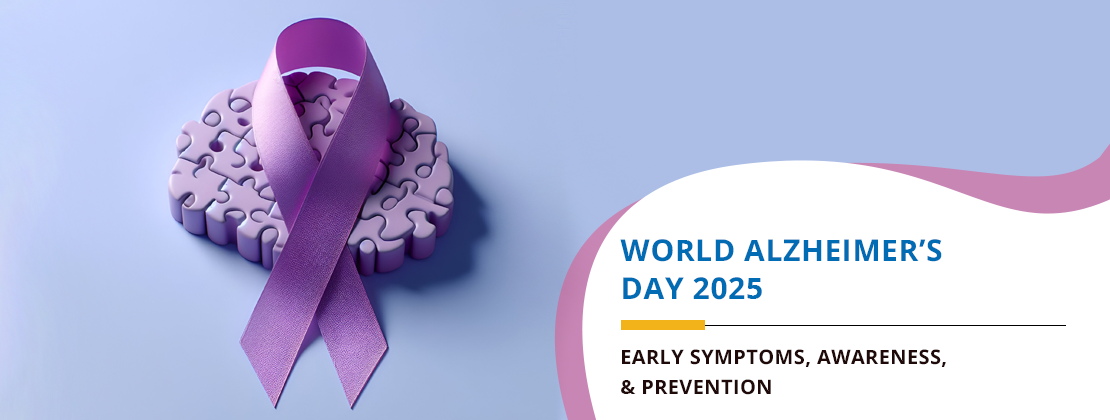
The global observance of World Alzheimer’s Day takes place on September 21 every year. It aims at increasing awareness about Alzheimer’s disease and minimising stigmatisation, as well as encouraging early support for patients and their carers. For 2025, the global theme is “Ask About Dementia. Ask About Alzheimer’s.” It emphasises how timely intervention can make a significant difference.
The Alzheimer’s and Related Disorders Society of India (ARDSI) says that more than 8 million Indians have dementia at present, a figure that could rise to over 16 million by 2050 because people are living longer. There are more risks associated with the way we live today. Yet, over 75% of dementia cases in India go undiagnosed until late stages.
Observing Alzheimer’s Disease Day in such communities plays a vital role in educating families and promoting screenings at HCG Hospitals, a neurology hospital in Bhavnagar.
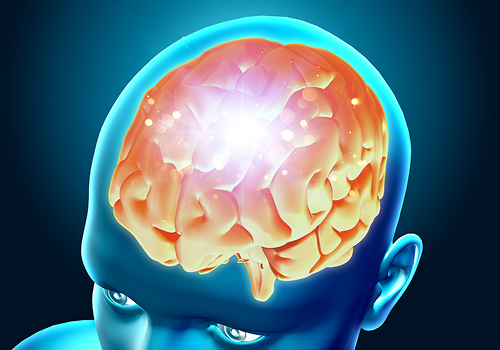
Gradually, Alzheimer’s disease affects memory, thinking, and behaviour, and eventually, one may not be able to carry out simple tasks. It is the most common cause of dementia, responsible for 60–70% of cases worldwide.
The observance of World Alzheimer’s Day 2025 reminds us that spotting problems early is the key to better outcomes.
Additional Reading: Understanding Alzheimer’s Disease | HCG Hospitals
Spotting Alzheimer’s early symptoms can be life-changing. Families often mistake memory issues or mood changes as “normal ageing”; however, awareness is the first line of defence.
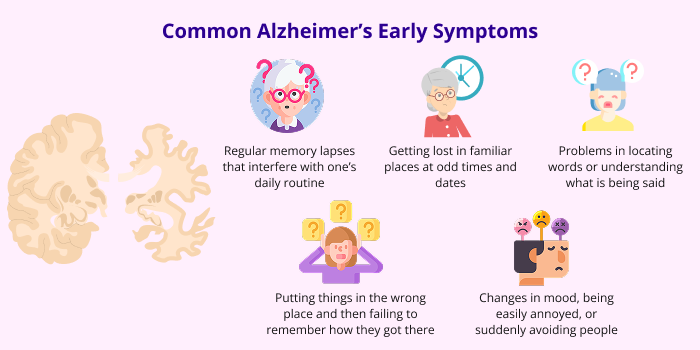
Studies reveal that over 75% of dementia cases in India are detected late because families assume these changes are harmless. Early recognition on Alzheimer’s Disease Day can encourage timely diagnosis.
Some subtle indicators are overlooked until the disease advances:
Emphasizing these points in Alzheimer’s disease awareness campaigns will assist families in recognizing when their loved ones require special attention.
|
Risk Category |
Details |
|
Biological |
Amyloid plaques, tau tangles, & brain shrinkage |
|
Genetic |
The APOE e4 gene increases risk |
|
Lifestyle |
Obesity, hypertension, diabetes, & smoking |
|
Age |
Risk doubles every 5 years after 65 |
In India, where diabetes and hypertension are highly prevalent, awareness about these risk factors becomes a crucial part of Alzheimer’s disease prevention.
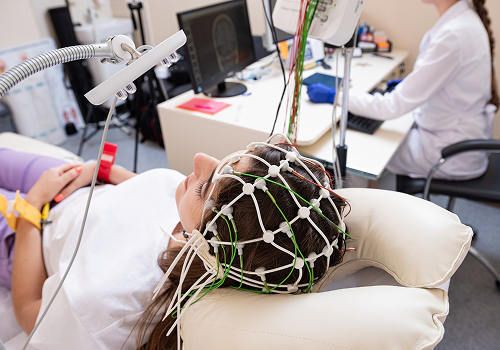
Timely diagnosis allows for better management of Alzheimer’s. Specialists use:
Benefits include:
Local hospitals in Gujarat, including HCG Hospitals, a multispeciality hospital in Bhavnagar, are increasingly setting up screening camps on Alzheimer’s Disease Day to promote early diagnosis and reduce stigma.
While a cure for Alzheimer’s is yet to be found, research suggests that nearly 40% of dementia cases worldwide could be prevented with proactive measures.
HCG Hospitals in Bhavnagar encourages families to adopt these lifestyle changes, making Alzheimer’s disease prevention a community responsibility.
Recent breakthroughs are offering hope:
Hospitals like HCG Bhavnagar are encouraging families to participate in Alzheimer’s disease awareness programmes that also share research updates, bridging the gap between global advancements and local care.
HCG hospitals, a multispeciality hospital in Bhavnagar, provides an integrated care model that goes beyond diagnosis.
Services include:
In cases where Alzheimer’s overlaps with other conditions, getting in touch with a super-speciality hospital like HCG Hospitals ensures holistic patient care.
Practical ways for residents to engage include:
The message worldwide on Alzheimer’s Disease Day 2025 is very straightforward: Don’t wait for symptoms to worsen—act early. Recognising Alzheimer’s early symptoms and adopting preventive measures can transform outcomes for patients and families.
If you are at risk of getting Alzheimer’s, it would be advisable to go for timely screening, counselling, and expert advice at leading multispeciality hospitals, like HCG Hospitals.
Together, we can make Alzheimer’s disease prevention a reality through awareness, community engagement, and early medical intervention.

This article is medically reviewed by Dr. Manish Patni, Consultant - Neurology, HCG Hospitals, Bhavnagar.
Memory lapses, difficulty with familiar tasks, sudden confusion, personality changes, and communication problems that greatly affect one’s daily activities are usually the initial symptoms of Alzheimer’s disease.
Indeed, by 2025, advanced tools like the Fastball EEG test and AI-enabled blood biomarker analysis will have been created to enable early detection of Alzheimer’s in comparison with the traditional memory and imaging tests.
Ageing, family history, and genetic variations (e.g., APOE e4), as well as lifestyle conditions such as obesity, smoking, hypertension, and uncontrolled diabetes, are some of the most common risk factors that make one prone to the disease.
Although changing one’s lifestyle does not assure prevention, there is proof that some measures, such as exercise, a balanced diet, mental activity, social engagement, stress management, and enough sleep, can lower the risk and postpone the onset of mild Alzheimer’s disease symptoms.
Genetic mutations, particularly those related to the APOE e4 gene, may be responsible for the hereditary nature of Alzheimer’s in some cases. Nonetheless, other crucial factors such as lifestyle, environment, and ageing also contribute to the disease progression.
At present, Alzheimer’s disease has no known cure. Nevertheless, there are treatments, therapies, and changes in one’s way of life that can greatly decelerate its advancement, enhance the patient’s quality of life, and make it easier for the family to cope with the symptoms
At present, Alzheimer’s disease has no known cure. Nevertheless, there are treatments, therapies, and changes in one’s way of life that can greatly decelerate its advancement, enhance the patient’s quality of life, and make it easier for the family to cope with the symptoms.






 Cardiac Sciences
 Spine Surgery
 Orthopaedic & Joint Replacement Surgery
 Neurosciences
 Critical Care Medicine
 Internal Medicine
 Oncology
 Pulmonology
  Dietician
  psychiatry
 Nephrology
 ENT
ENT Gastroenterology
  Dentistry
  Radiology